From Ideas to Impact: Building Scholarship in Practice was a standout session at the Scholarship Conference 2025.
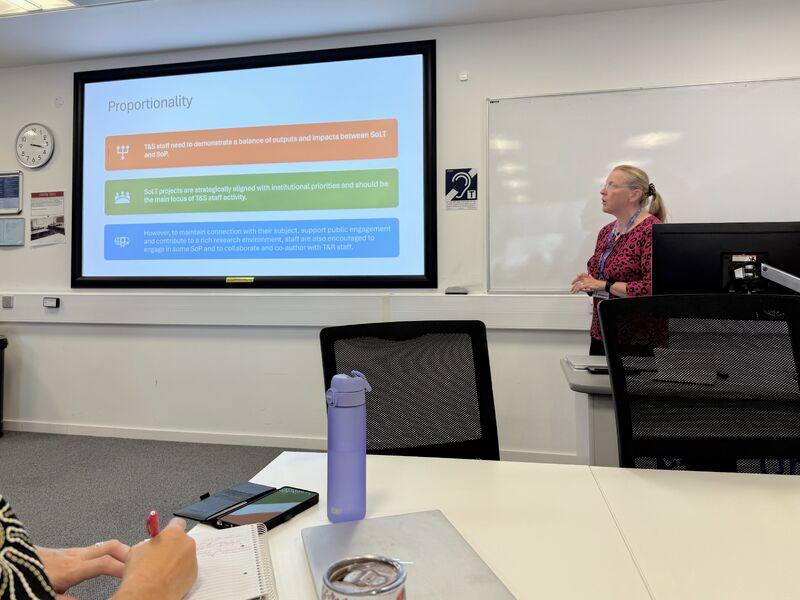
The workshop was led by Professor Susan Kinnear, Co-Lead of the Scholarship Hub with Professor Linda Martindale at the University of Dundee and Associate Dean (Education & Student Experience) in the School of Business. Susan not only shared her vision, experiences, and practical insights, but also showed the “how” of turning scholarship into impact locally and globally. Participants praised the Scholarship Projects model in the School of Business as a strong example of how local initiatives can drive wider change.
To further illustrate this vision in practice, colleagues and I contributed case studies:
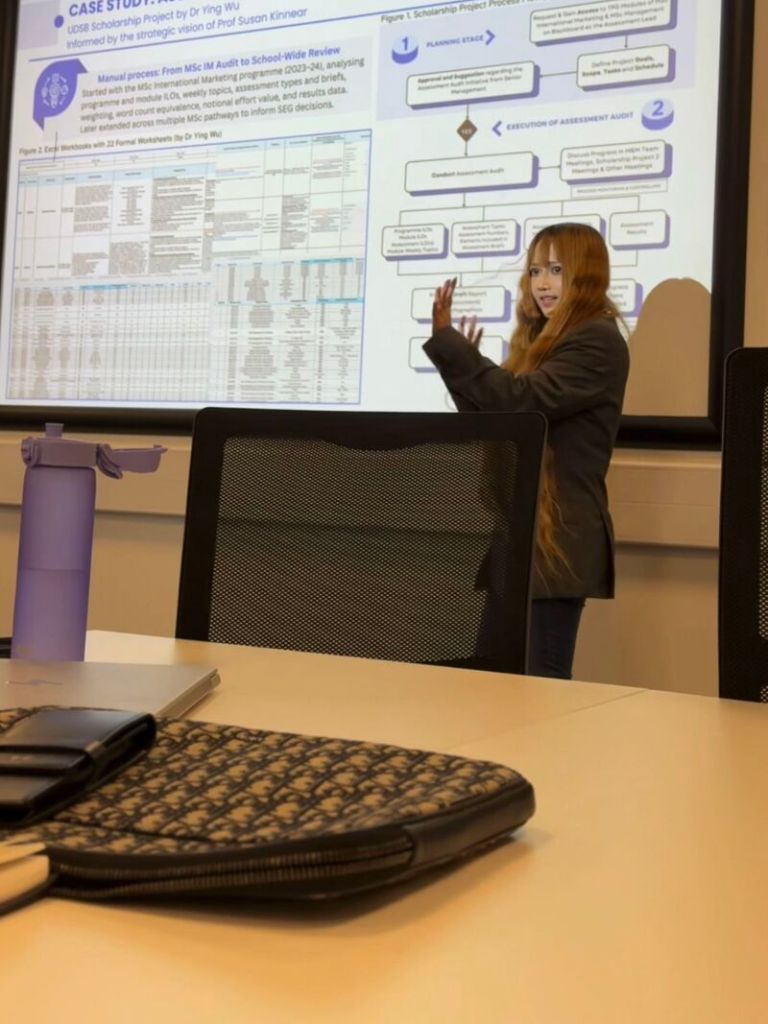
Assessment Equivalences (my case study)
I reviewed MSc programmes across the Business School, uncovering inconsistencies in assessment weightings, word counts and notional effort values. What began as a single audit developed into a School-wide project, and my recommendations that followed led to formal policy changes promoting fairness, transparency and clarity.
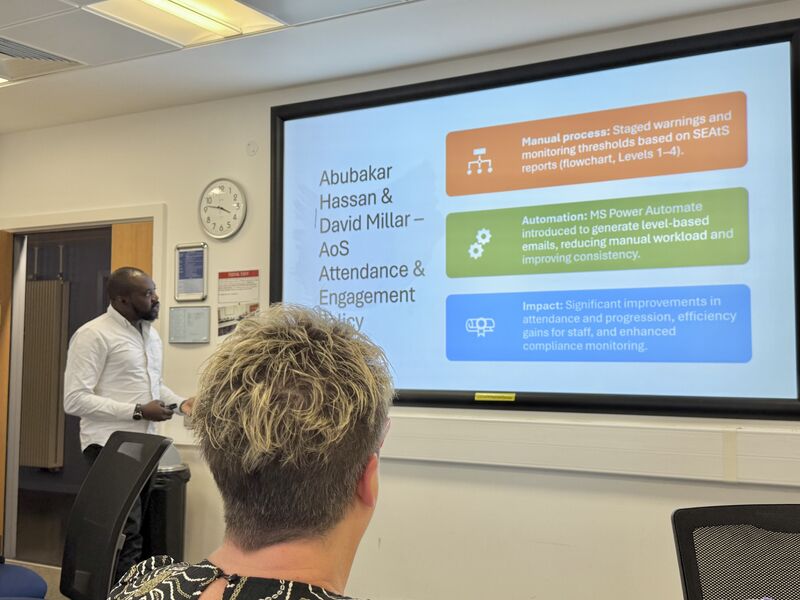
AoS Attendance & Engagement Policy (Abubakar & David)
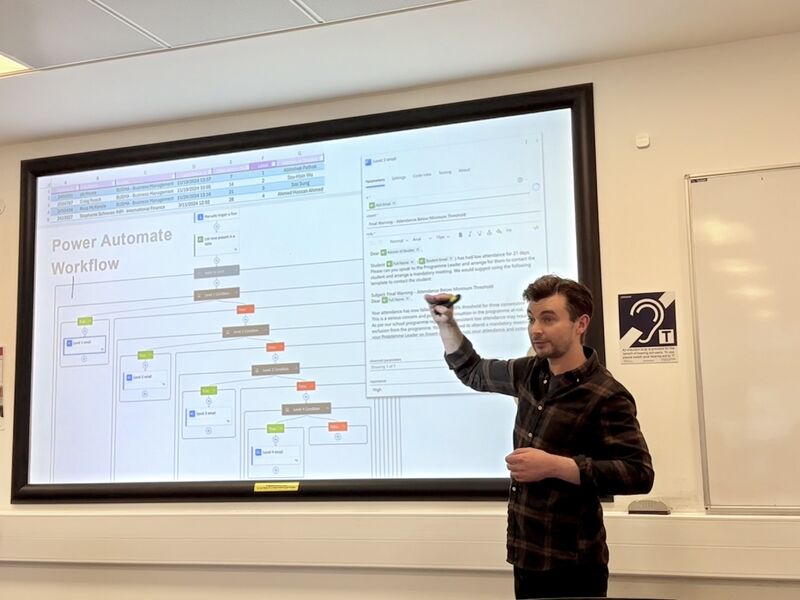
Dr Abubakar Hassan and David Millar demonstrated how scholarship informs institutional practice. Their work introduced MS Power Automate to generate level-based emails. This significantly reduced manual administrative workload while improving consistency and timeliness in communication to support student engagement.
The session concluded with participants mapping their own projects against institutional, national and international impact frameworks, turning ideas into actionable next steps and showing how evidence-based scholarship drives lasting change.
Big thanks to Susan for leading such an insightful workshop and to the conference team for creating an engaging space for discussion.
Digital equity: a Global South–North dialogue
At the University of Dundee Scholarship Conference, Dr Seemab Farooqi and I contributed our poster: Digital Equity in Higher Education: A Global South–North Dialogue on Inclusion and Accessibility.
Our study asked a simple question: does “digital inclusion” mean the same thing everywhere?
Findings show striking contrasts. In Pakistan, faculty often practise what we describe as “unconscious inclusivity,” designing engaging content without formal accessibility frameworks, shaped by socio-economic digital divides.
In the UK, systematic compliance frameworks are more established, but tensions remain between regulation and personalisation, and awareness of built-in accessibility tools is low.
Our poster formed part of the conference’s poster presentation session. These findings highlight how differently inclusion is understood across contexts, and we are excited to keep exploring this further as our research continues.
Originally shared on LinkedIn.