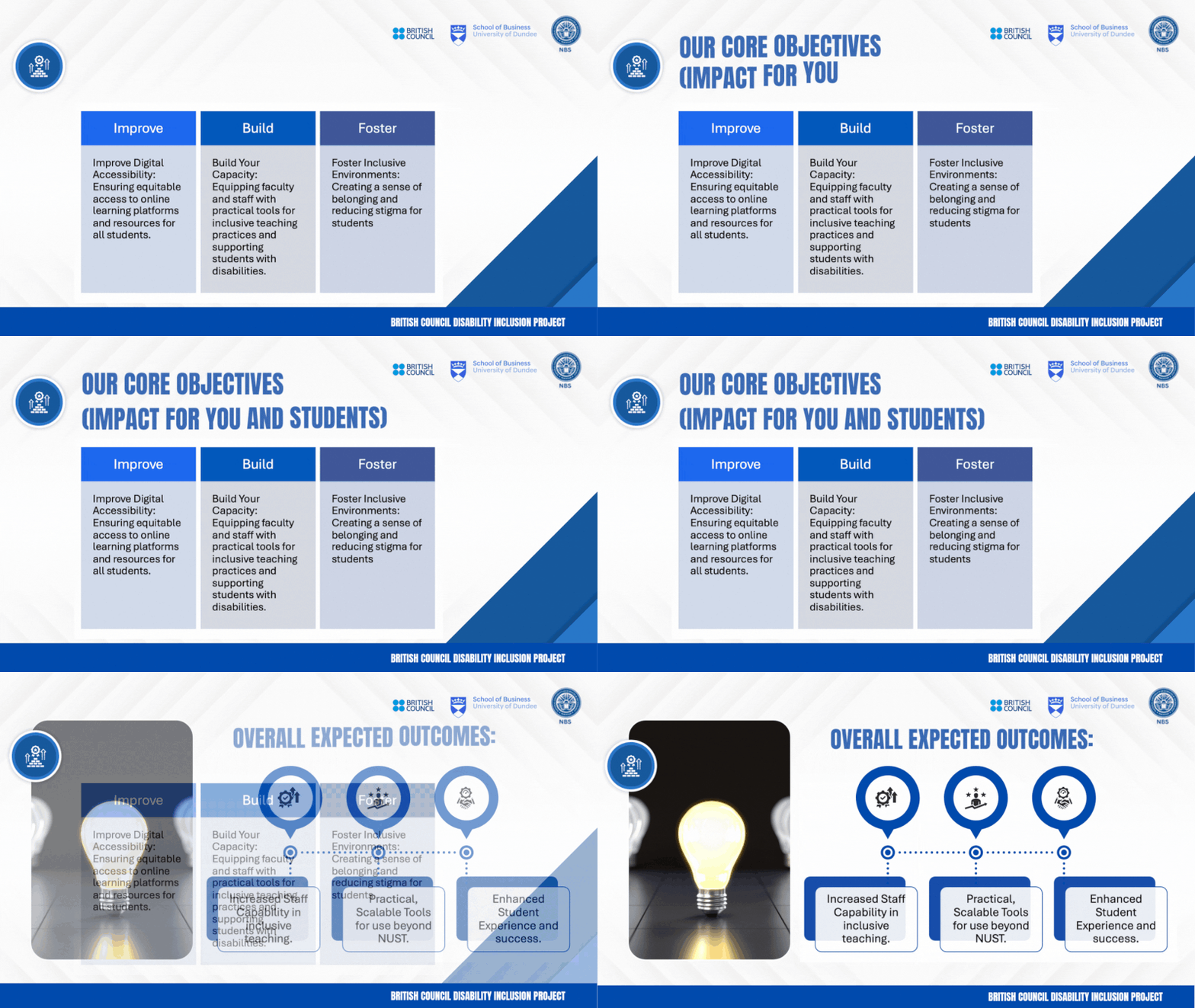
We were delighted to deliver the “Awareness Session on Disability Inclusion and Digital Accessibility in Higher Education”, a content-intensive and meaningful webinar, as part of the British Council Going Global Partnerships between the University of Dundee School of Business and National University of Sciences and Technology (NUST) Business School.
There were 24 engaged participants from Pakistan. The session sparked practical conversations on how to make higher education more inclusive and digitally accessible.
The webinar opened with a warm welcome from our colleagues at NUST, who also introduced their team and set a positive tone for the session.
Dr Seemab Farooqi introduced the project. She shared what inclusion means in higher education and why digital accessibility is essential. She also reflected on how we can move beyond compliance to achieve meaningful change.
I discussed common digital accessibility barriers. These included image-only PDFs, missing alt text, poor contrast, and more. I also shared simple and practical quick wins that educators can start using in everyday teaching.
David Millar gave a live demo of several tools. He introduced Claude AI, NotebookLM, and Microsoft Word’s accessibility checker. His demo showed how these tools can support neurodiverse learners and improve teaching practices.
In the Q&A and reflection session, we had a very thoughtful contribution from Ms Kishwar S. Gulzar. She highlighted the importance of creating lean, low-cost, offline-accessible, and locally translatable resources. This is especially important for students who may not have access to high-end devices or reliable internet.
Special thanks to Dr Asfia Obaid, Dr Lubaba Sadaf, Dr Fatima Qaisar, and Dr Sumbal Babar for hosting us with such warmth and generosity.
Originally shared on LinkedIn.